


England’s Hundred participants did not look ready for Test cricket
England’s Hundred participants did not look ready for Test cricket

Tim WigmoreWed, August 19, 2026 at 7:08 PM UTC
0

Jofra Archer was taken out of the attack after two overs - Lee Smith/Reuters
Twelve balls. That was all it took for Jofra Archer to convince Joe Root that the captain should entrust the new ball to someone else.
In his first two overs, Archer did not concede a single run. The trouble was, he scarcely threatened to take a wicket.
Pakistan’s batsmen, Imam-ul-Haq and Shan Masood, only had to play at three of Archer’s first 12 deliveries. The other nine balls could either be safely left alone outside the off stump or were fired down the leg side.
With good reason, Root was often accused of over-bowling Archer during his first stint as Test captain. But in his first Test back as permanent captain, Root did not return to Archer until the 17th over; the quick was only required to deliver nine overs in Pakistan’s entire first innings.
Instead, Root relied upon his other new-ball bowler. Ollie Robinson bowled eight overs with the new ball, and 18 in all, for a simple reason: he repeatedly compelled the batsmen to play, generating lateral movement from a probing length. In his first burst, before rain interrupted play, Robinson was left just three times in 30 deliveries. Robinson’s five for 51 vindicated his full length and relentless harassment of off stump.

Ollie Robinson took five wickets on the opening day against Pakistan - Stu Forster/Getty Images
His performance also vindicated Robinson’s preparation for the series. Over the last month, Robinson has readied himself for the demands of Test cricket by playing four 50-over games for Sussex, alongside ramping up his red-ball training.
Archer was not able to ease himself back into Test cricket in the same way. Instead, he was playing for Southern Brave. His last Hundred match was 11 days before the Headingley Test; this gap was only so large because, after they were eliminated early, Brave rested Archer from their final game.
But Archer’s bowling at Headingley betrayed a man who had not fully adapted to the differences between Hundred-ball and five-day cricket. His length was significantly shorter than Robinson’s: ideal to contain in white-ball cricket, but less optimal to exploit the assistance offered by the Headingley surface.
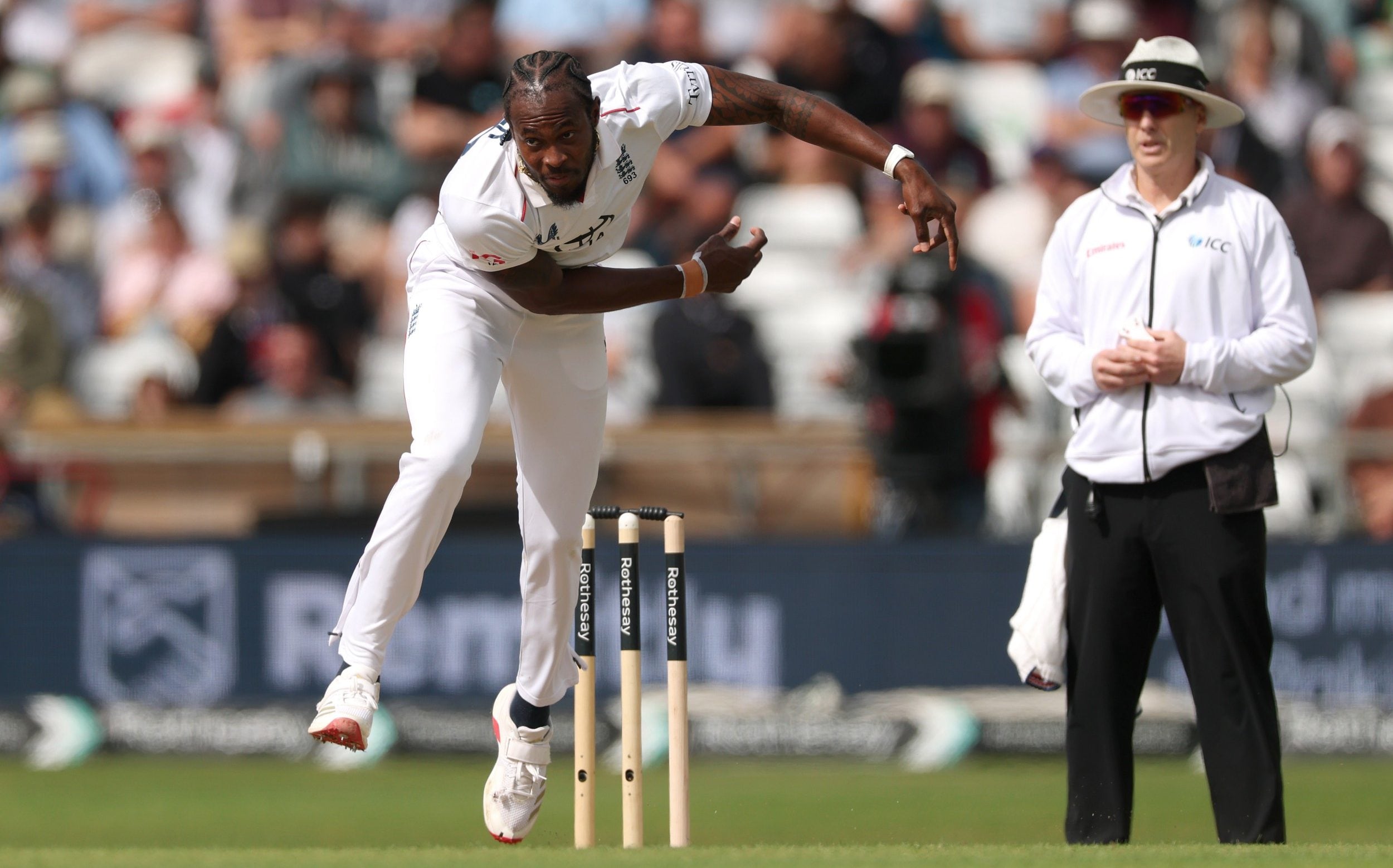
Archer’s length was too short on day one - Stu Forster/Getty Images
Yet Archer was not alone in struggling to readjust to the vastly differing demands of the five-day game. Sixty-one hours before England took the field, Gus Atkinson had won the Hundred for Manchester Super Giants 200 miles away, at Lord’s.
But, like Archer, Atkinson’s bowling at Headingley revealed a man feeling himself back into Test cricket. Atkinson offered only limited threat as his 12 overs conceded 40 runs.
Advertisement
In recent years, the England set-up has used leave percentage as a marker of their seam bowlers’ effectiveness. Stuart Broad identified keeping opponents’ leave percentage against him to below 15 per cent as a marker of bowling at his best.
On the opening day at Headingley, just 9.1 per cent of Robinson’s deliveries were left. But both Archer and Atkinson were left nearly 28 per cent of the time.
Josh Tongue, who lifted the Hundred for the Super Giants alongside Atkinson on Sunday night, was initially wayward too, leaking runs when he bowled too wide of off stump or strayed down leg stump. In archetypal Tongue fashion, his figure transformed by dismantling the tail: figures of one for 41 after 7.2 overs metamorphosed into a final haul of five for 46 from 9.1 overs.
Yet Tongue’s clinical evisceration of Pakistan’s lower order could not conceal a central theme of England’s opening day. Robinson, by far England’s best performer, looked fully prepared for the rigours of Test cricket. The rest of the attack, who all have Hundred contracts, did not.
The start of England’s first innings offered another contrast. Ben Duckett, who was a losing finalist on Sunday night, opened alongside Emilio Gay, who was not enlisted by the Hundred.
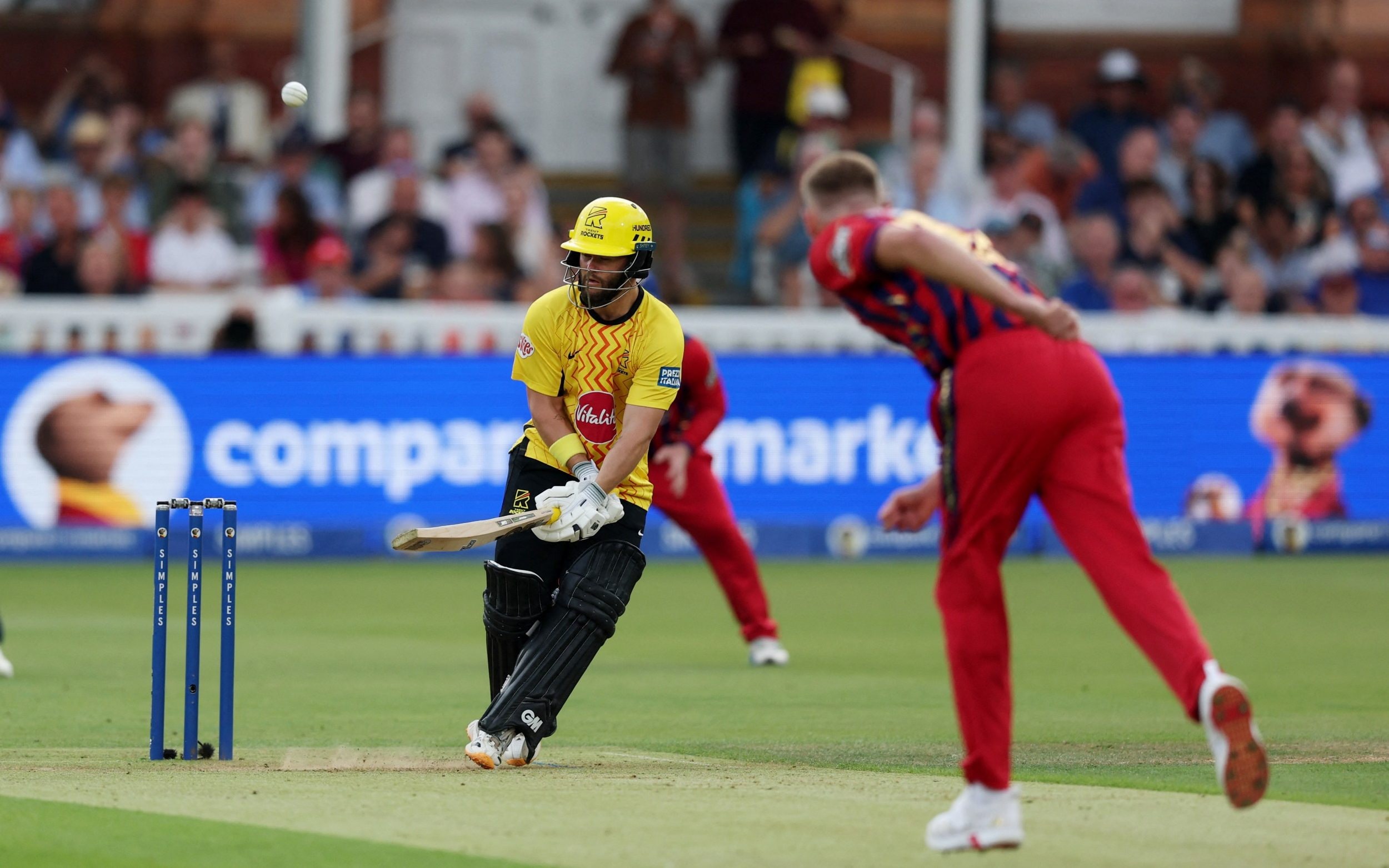
Ben Duckett plays a shot off the bowling off Gus Atkinson in the Hundred final – both are playing for England in the first Test - Paul Childs/Reuters
Duckett only narrowly survived being given out third ball, when Pakistan’s review for an lbw decision showed the ball to be clipping the top of the stumps. He was skittish – he almost chipped to cover on seven and was beaten twice on the outside edge – before falling lbw for 15. Gay batted more fluently than at any point in his nascent Test career, though he was aggrieved not to convert his promise into a more substantial contribution than 33.
England’s day ended with Jordan Cox and Root in tandem at the crease. Only a week before, they had been team-mates for Welsh Fire. The pair were so concerned by the prospect of substandard preparation for this series that they developed plans to arrange extra training sessions with a red ball during the final stages of the Hundred. Instead – happily for England’s Test batting – Fire were eliminated before the play-offs, affording Cox and Root three full days’ training at Headingley before the Test.
A year ago, when England returned to international cricket at Headingley after the Hundred, the side proved ill-equipped to readjust to a longer format of the game. England were all out for 131 in the opening one-day international against South Africa, who waltzed to victory in 20.5 overs.
A combination of Pakistan’s shoddiness, and the considerable importance of Root winning the toss, helped to spare England a similar fate this year. Yet the single biggest reason for England’s fine opening day was a man unwanted by English domestic cricket’s flagship competition.
Robinson’s excellence, and the mixed fortunes of those in-demand in the Hundred, highlights a chastening truth. Too often, the English domestic schedule still does not work in concert with the needs of the Test team.
Source: “AOL Sports”
